Did You Know?
- Homeopathy is the most widely practiced form of complementary and alternative medicine worldwide.
- It is recognized by both the World Health Organization (WHO) and FDA, the world’s largest regulatory body for food and medicine.
- Homeopathy can address not only physical illnesses, but also emotional and psychological conditions—including mood and behavioral disorders, obsessive thoughts, sleep disturbances, frequent crying, intense anger, irritability, apathy, jealousy, and more.
- In homeopathy, treatment focuses more on the individual’s overall personality and constitution than on the disease itself.
- A well-prescribed homeopathic remedy often eliminates the need to consult multiple specialists, offering a more unified and holistic approach to healing.
- Homeopathic remedies, when correctly prescribed, are free from side effects.
- Homeopathy is also used in the treatment of plants (at both household and agricultural levels) and animals (in pet care and livestock management), and has shown promising results in both fields.
- True healing takes time. Homeopathy works by rebuilding health from the inside out, addressing the root causes of illness rather than just suppressing symptoms.
- At your first homeopathic consultation, your thoughts and emotions matter more than the illness itself, which is why most of our questions will focus on understanding you as a person.
- Patients who have received long-term chemical medications, especially steroids and antibiotics, may experience a slower and more challenging healing process.
- In high-stress environments or under intense mental and physical pressure, the effect of a homeopathic remedy may be slower or even temporarily halted.
- Many countries around the world now have universities, hospitals, and research centers dedicated to homeopathy.
Countries Active in the Field of Homeopathy
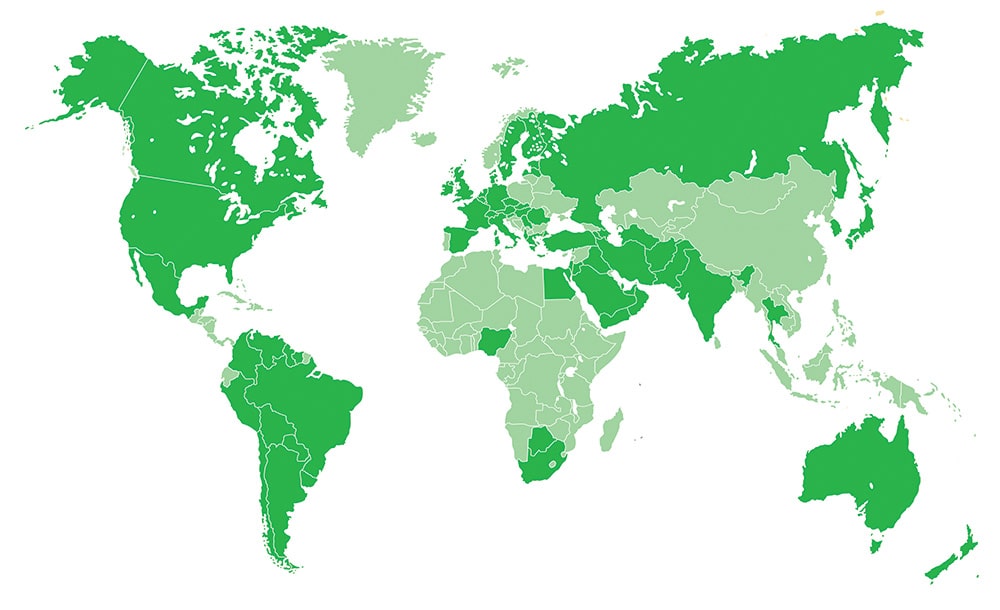
Countries shown in dark green are actively engaged in the field of homeopathy.
The names of the countries that are involved in the field of homeopathy.
| Austria | Belgium | Oman |
| Jordan | Botswana | France |
| Uruguay | Bolivia | Finland |
| Spain | Paraguay | Canada |
| Australia | Pakistan | Croatia |
| Estonia | Peru | South Korea |
| Israel | Thailand | Colombia |
| Slovakia | Turkmenistan | Georgia |
| Afghanistan | Turkey | Guyana |
| United Arab Emirates | Czech Republic | Lithuania |
| England | Denmark | Egypt |
| Italy | Russia | Macedonia |
| Iran | Romania | Mexico |
| Ireland | Japan | Myanmar |
| Azerbaijan | Suriname | Nigeria |
| Argentina | Sweden | New Zealand |
| South Africa | Swaziland | Venezuela |
| Albania | Switzerland | Netherlands |
| Germany | Chile | India |
| United States | Serbia | Yemen |
| Brazil | Iraq | Greece |
| Brunei | Saudi Arabia |
A Glimpse Into the Depth of This Science
The homeopathic approach to healing is rooted in holism—the belief that the human being is an integrated and interconnected whole. Every part of the body influences, and is influenced by, the others. When one area becomes unwell, the imbalance may ripple throughout the entire system, even if it only shows symptoms in specific organs or functions. That’s why in homeopathy, a symptom is never viewed in isolation. Illness and healing are understood in the context of the whole person. With our limited human perception, we often overlook the many dimensions of what may appear to be a simple condition. In homeopathy, health is not defined solely by the physical body; mental, emotional, and cognitive aspects are equally important in understanding the true state of well-being.
From this perspective, each person suffers from a single underlying disease—an imbalance that manifests in different parts of the body and in various forms. When someone becomes ill, the entire system is affected. Therefore, treatment must support the whole person, guiding the entire being toward healing rather than improving one part at the expense of another.
In homeopathy, treatment is based on the individual—not just the illness. In fact, who you are matters more than what condition you have. Your outlook on life, lifestyle, thoughts, emotions, personal preferences, past experiences, sleep patterns—even the dreams you recall—are all carefully considered in selecting the right remedy. This personalized approach ensures that the treatment resonates with your unique physical, emotional, and mental makeup.
Key Features of Homeopathy

Duration of Treatment
In homeopathy, healing works from within—rebuilding health at its foundation. Because illness often has deep-rooted origins, true recovery is a gradual process that requires patience. The duration of treatment varies for each individual and is influenced by many factors, including personal health history and the choices—supportive or harmful—you have made for your well-being in the past. It is important to note that treatments promising quick results are not always beneficial in the long run; they may only suppress or delay the expression of illness rather than restore genuine health.
Sources of Homeopathic Remedies
Homeopathic remedies are prepared from a wide variety of sources: minerals, plants, animals, biological materials, and synthetic compounds. Some are also derived from what are known as imponderabilia—intangible sources such as light, magnetism, or other natural forces.
It is worth noting that the U.S. Food and Drug Administration (FDA)—one of the world’s most respected regulatory authorities—recognizes and regulates homeopathic remedies. (For more information, please see the related article in our library.)
Another unique advantages of homeopathy is that its remedies are non-toxic. Even in the case of herbal medicines, plants often contain both healing and toxic properties, which means their use may leave unwanted side effects on the body. In homeopathy, however, the toxic elements are removed through the preparation process, leaving only the curative essence of the substance to act on the body.